


Understanding Application Security Testing (AST)
Application Security Testing (AST) is a collective term for methodologies aimed at identifying and resolving vulnerabilities in software. This process includes conducting various tests, analyzing results, and generating reports to assess the security of an application.
While single snapshots of security tests are useful, continuous testing is far more effective in ensuring comprehensive security across web applications, APIs, business logic, and other systems throughout the software lifecycle.
Phases and Importance of AST
AST can be applied at different stages of the Software Development Lifecycle (SDLC). Implementing AST early in the development phase enables teams to identify and address vulnerabilities before deployment. Moreover, continuous testing post-deployment ensures the detection and mitigation of emerging threats, safeguarding the application in real-time.
Types of Application Security Testing Solutions
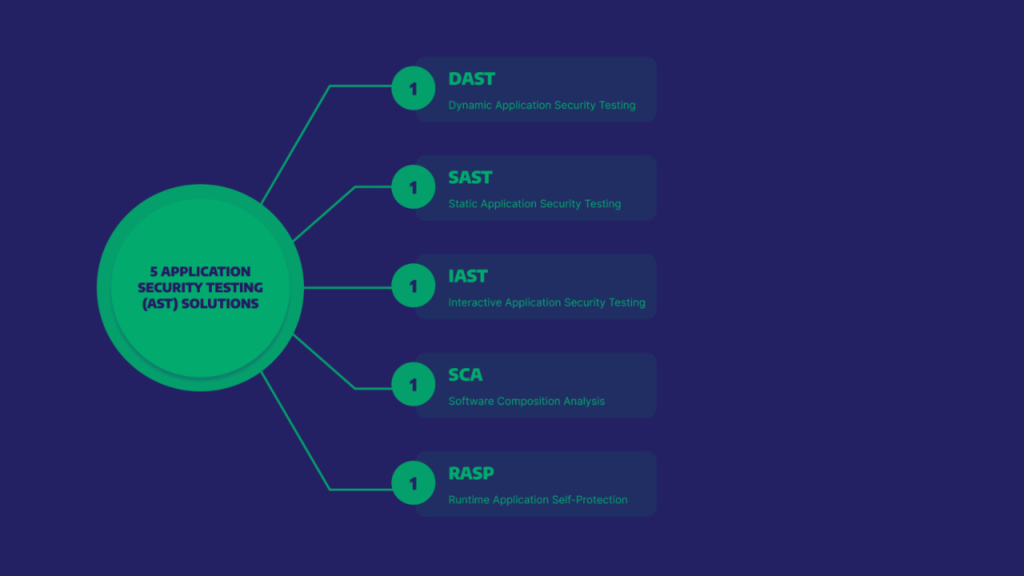
1. Static Application Security Testing (SAST)
- Overview: SAST is a white-box testing methodology focused on analyzing the source code of an application at rest. It identifies vulnerabilities like coding flaws and design weaknesses that may be exploited.
- Key Features:
- Uses predefined rules to detect errors in source code, bytecode, and binaries.
- Targets vulnerabilities such as SQL injection, input validation errors, and stack buffer overflows.
- Integrates with IDEs and CI/CD pipelines to enhance efficiency during development.
2. Dynamic Application Security Testing (DAST)
- Overview: DAST adopts a black-box approach, simulating external attacks on an active application to detect architectural vulnerabilities and security gaps.
- Key Features:
- Examines applications during runtime in test or production environments.
- Ideal for finding vulnerabilities in exposed interfaces and configurations.
3. Interactive Application Security Testing (IAST)
- Overview: IAST combines static and dynamic approaches, running tests on a deployed application to identify vulnerabilities in real-time.
- Key Features:
- Deploys agents and sensors to monitor the application’s behavior.
- Identifies vulnerable code lines and provides actionable insights for remediation.
- Seamlessly integrates with CI/CD environments.
4. Software Composition Analysis (SCA)
- Overview: SCA tools focus on analyzing open-source components in the codebase, identifying vulnerabilities, license issues, and compliance risks.
- Key Features:
- Scans the codebase for open-source components and detects vulnerabilities.
- Prioritizes issues based on severity and recommends fixes.
5. Runtime Application Self-Protection (RASP)
- Overview: RASP offers real-time protection by embedding security controls directly into the application’s runtime environment.
- Key Features:
- Detects and prevents attacks like SQL injection, buffer overflows, and XSS.
- Monitors application behavior to block malicious activities dynamically.
Application Security Testing Approaches
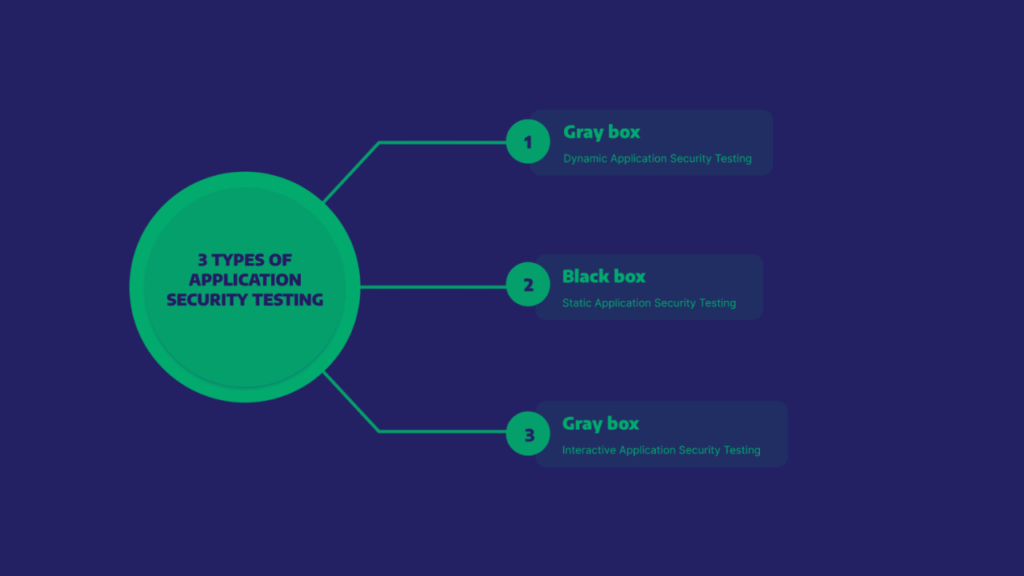
1. Black-Box Security Testing
- Description: Simulates an external attack with no prior knowledge of the application’s internal workings.
- Benefits:
- Tests end-to-end security, including misconfigurations and integration vulnerabilities.
- Effective for identifying external threats.
- Limitations: May overlook internal vulnerabilities.
2. Gray-Box Security Testing
- Description: Provides partial knowledge of the application to simulate attacks by a privileged insider or a threat actor with reconnaissance capabilities.
- Benefits:
- Balances depth and efficiency in identifying critical vulnerabilities.
- Limitations: Results may be skewed based on the tester’s knowledge level.
3. White-Box Security Testing
- Description: Offers full access to the application’s internals, including source code and architecture.
- Benefits:
- Comprehensive detection of security flaws, including coding issues and logic vulnerabilities.
- Ideal for identifying internal misconfigurations and poor coding practices.
- Limitations: May highlight issues with low exploitability.
Best Practices for Effective Application Security Testing
- Start Early: Incorporate AST during the initial phases of development to embed security into the application’s foundation.
- Use Multiple Techniques: Combine SAST, DAST, and other methods to gain a well-rounded security assessment.
- Test Regularly: Conduct tests after every major update or code change to identify newly introduced vulnerabilities.
- Prioritize Vulnerabilities: Focus on addressing high-severity issues first to mitigate risks effectively.
- Collaborate Across Teams: Involve developers, testers, and operations teams in the security process to foster a culture of shared responsibility.
- Monitor Continuously: Regularly track application performance and address findings promptly to maintain robust security.
Conclusion
Application security testing is crucial in safeguarding modern software from evolving threats. By adopting a combination of methodologies and leveraging the latest tools, organizations can proactively identify and mitigate vulnerabilities, ensuring a secure environment for users and stakeholders alike.